


In short
The easiest places to meet people over 60 are groups built around an interest: learning groups such as the u3a in the UK and Osher Lifelong Learning Institutes in the US, walking clubs, Scottish country dancing, which has branches worldwide, and Men's Sheds, which run in at least 12 countries. Over 60s Singles suggests going for the activity and letting friendships grow.
Key facts
| UK: u3a learning groups | Over 1,000 locations; 020 8466 6139 |
|---|---|
| US: Osher Lifelong Learning Institutes | 125 programmes for people 50 and over |
| Men's Sheds | Over 2,500 sheds in 12 countries |
| Scottish country dancing (RSCDS) | 159 branches worldwide |
| Details checked | 8 November 2026 |
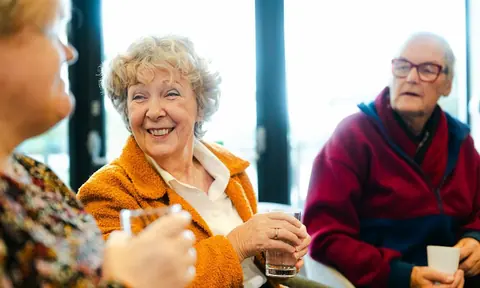
Ask couples who met later in life how it happened, and many will name something ordinary: a Tuesday art history group, or the walk to the reservoir. Groups work because the activity does the hard part. You have something to talk about, you see each other week after week, and nobody is under pressure.
Why groups work better than singles nights
Groups work because you meet the same people repeatedly, with a shared reason to be there that has nothing to do with romance.
- There is a reason to be there, so nobody feels on show.
- You meet people more than once. Most friendships, and most romances, grow from repeated, easy contact rather than one evening.
- You see people as they are: kind to the newcomer, patient with the slow walker, funny about their own mistakes.
- Your social life grows either way. Even if you meet nobody special, you have something you enjoy and people to have coffee with.
The main kinds of group at a glance
Four kinds of group turn up in most countries, and each suits a different kind of person.
| Kind of group | What happens | Good for |
|---|---|---|
| Learning groups | Member-led classes and talks on history, languages, art, gardening and more | People who like learning and talking |
| Walking clubs | Led walks, graded from gentle to challenging | People who talk more easily side by side |
| Dancing | Classes and social dances where you change partners | People who like music and meeting a whole room |
| Men's Sheds | Community workshops for practical projects | People who'd rather make something than make small talk |
Choirs, bowls and bridge clubs, local history societies, volunteering and faith groups bring people together in the same way. Your library and local council are good places to ask.
Learning groups
Learning groups for older people go under different names in different countries, but the idea is the same: classes and talks for the fun of it, with no exams.
In the UK
The u3a is a movement of local learning groups for people no longer in full-time work, run entirely by their members. According to the u3a, there are over 1,000 locations, with groups on subjects such as history, languages, art, crafts, gardening and photography. According to Age UK, there is no age limit and fees are set locally and usually modest. Use "Find a u3a" on the u3a website, or ring the national office on 020 8466 6139.
In Australia
U3As in Australia provide learning, social and physical activities for retirees. In Victoria, U3A Network Victoria explains that each U3A is independent and run by volunteers, which keeps costs low, and that membership usually covers its classes. Its website has a search to find one near you; other states have their own networks.
In the United States
The Osher Lifelong Learning Institutes are 125 programmes on university campuses, with at least one in every state and the District of Columbia. Their non-credit courses are designed for people aged 50 and over, without exams or grades. For senior centres and other local services, the Eldercare Locator, a public service of the Administration for Community Living, can be reached on 1-800-677-1116.
Walking clubs
Walking side by side is one of the easiest ways to talk to someone new: no need for eye contact, plenty to look at, and a natural end point at the café. In Britain, the Ramblers has over 500 groups run by local volunteers, with walks graded from gentle to challenging. Elsewhere, look for local walking clubs, park and council walking programmes, and "health walks", which are usually short and free. Ask the leader which walks suit a first-timer, and mention anything that affects how far or fast you can go.
Dancing
Dancing gives you a reason to talk to a different person every few minutes. Scottish country dancing is especially sociable: dances are done in sets with other couples, so you meet everyone in the room. The Royal Scottish Country Dance Society has 159 branches worldwide and over 300 affiliated groups, and many run beginners' classes. Its website has a finder. Ballroom, line dancing and folk dance clubs work the same way and are common in most countries.
Men's Sheds
A Men's Shed is a community workshop where people take on practical projects, share skills and make friends. The movement started in Australia, where the Australian Men's Shed Association lists more than 1,300 sheds and says more than 2,500 sheds run in 12 countries. It has a "Find a Shed" search by postcode and a phone line, 1300 550 009.
- In Ireland, the Irish Men's Sheds Association says over 450 sheds are registered with it; it has a shed map, and its number is 0818 900 800.
- In the UK, the UK Men's Sheds Association has a "Find a shed" page. Sheds are mostly aimed at men, though the association says everyone is welcome; check with your local shed.
Who groups suit, and who they don't
Groups suit people who are happy to let things develop slowly. They are less suited to anyone who wants to know quickly whether someone is single and interested.
- Groups suit you if you enjoy the activity for its own sake, like seeing the same faces each week, and would welcome friends as much as a partner.
- Groups may frustrate you if you want to meet single people specifically, can't commit to a regular day, or live a long way from the nearest group. Many people do both: a group for company, and online dating for introductions.
Making the first visit easier
A quick call or email to the organiser makes the first visit far easier. Ask whether you can come as a visitor before joining, what a typical session involves, whether the venue is step-free with seating and toilets, and whether you need any kit.
- Go twice before you decide. The first visit is the most awkward one, for everyone.
- Arrive a little early and introduce yourself to whoever is setting up.
- Stay for the tea. The conversation afterwards is where people get to know each other.
When you like someone in the group
Take your time, then suggest a coffee on another day, away from the group, so it is easy for them to say no without awkwardness the following week. If it doesn't work out, you will still see each other on Tuesdays, so keep things friendly and private.
The same care you would take with someone you met online still applies. Our guides to planning a first date and meeting a date safely cover the basics, and people in their seventies and eighties will find more in our section for the over-70s.
Want company without the dating? See over 60s social groups.
Questions people ask
Are there singles groups for over-60s near me?
Some areas have them, but interest groups are usually a better bet. Learning groups, walking clubs and dance classes meet every week in many towns, nobody is under pressure, and you always have something to talk about. If you click with someone over a few weeks, suggesting a coffee on another day is the natural next step.
Can I go on my own?
Yes, and most people do. Arriving alone is normal at learning groups, walks, dance classes and sheds. Tell whoever is running the session that it is your first time, and stay for the tea or coffee afterwards, which is where most conversations start. Taking a friend the first time is fine too if it helps.
Is it all right to go hoping to meet someone?
Of course, as long as you go for the activity too. People are there to learn, walk or dance, and they notice if you are only there to look. Treat it as a way to widen your circle. If romance follows, that is a bonus, and if it doesn't, you still have a class you enjoy.
Do I need a partner for Scottish country dancing?
Check with the class, but usually not. Dances are done in sets with other couples, so you change partners and meet plenty of people in an evening, and many branches run classes for beginners. The Royal Scottish Country Dance Society's website has a finder for its branches and affiliated groups.
Are Men's Sheds only for men?
They are mostly aimed at men, but rules vary from shed to shed, and the UK Men's Sheds Association says everyone is welcome. Ask your local shed before you go. For people who would rather make something than make small talk, a shed is a relaxed way to meet new people.
Keep reading

- Christian dating over 60How Christians over 60 meet someone who shares their faith, and how to date well.


Sources
- What we do, u3a
- University of the Third Age, Age UK
- Ramblers groups, Ramblers
- Find a dance class, Royal Scottish Country Dance Society
- Find a shed, UK Men's Sheds Association
- What goes on in a Men's Shed, Irish Men's Sheds Association
- Australian Men's Shed Association
- Why should you join a U3A?, U3A Network Victoria
- Osher Lifelong Learning Institutes, The Bernard Osher Foundation
- Eldercare Locator, Administration for Community Living
Checked 20 November 2026. Spotted something out of date? Tell us.